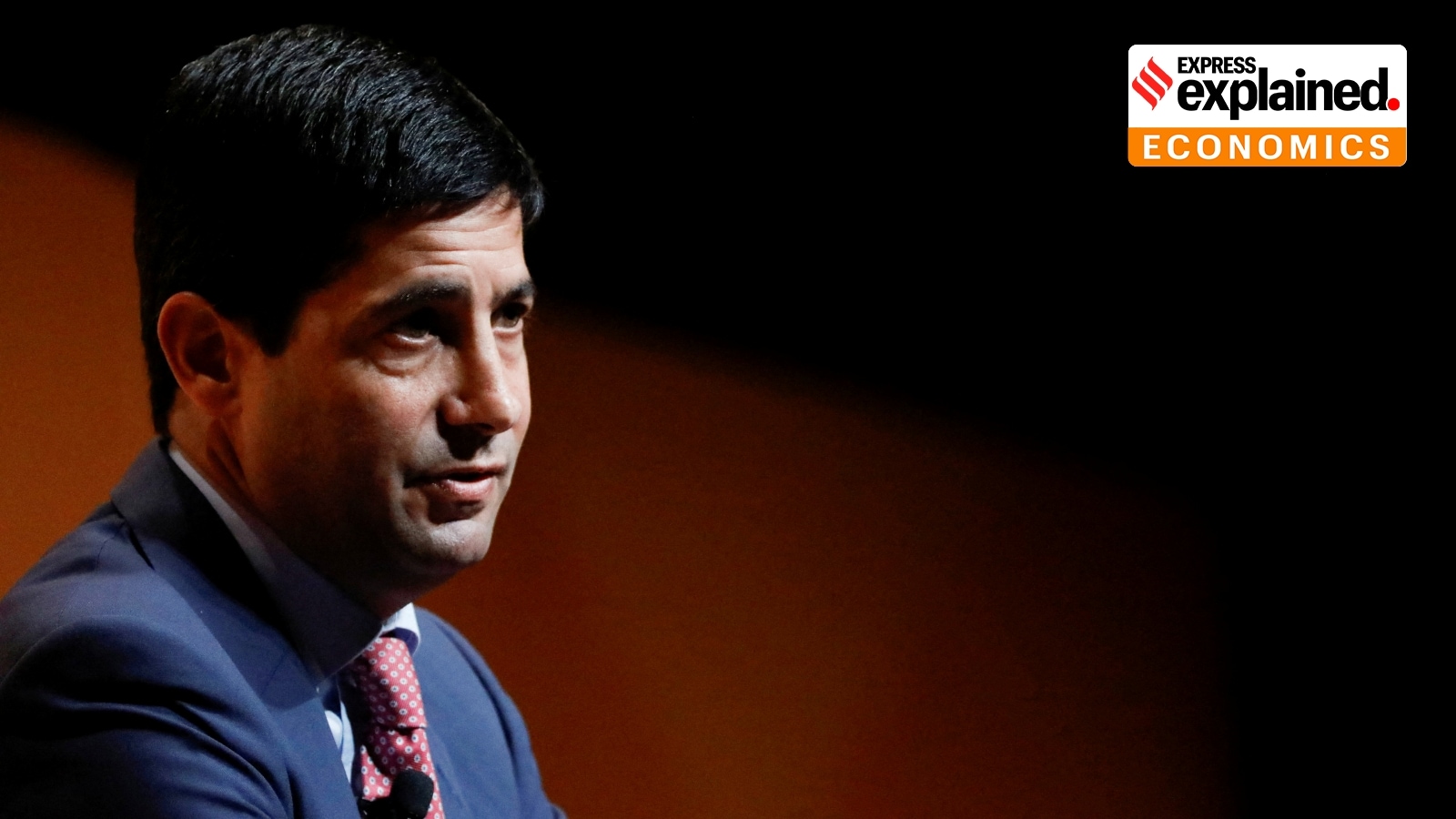
The Looming Challenge for Kevin Warsh's Fed Vision
As the prospect of Kevin Warsh potentially stepping into the powerful role of Federal Reserve Chair draws closer, the path to implementing the interest-rate cuts reportedly favored by President Donald Trump appears increasingly fraught. Even before formal nomination and confirmation, Warsh's ambitions for swift and substantial
warsh rate cuts are encountering significant headwinds from a resilient U.S. economy and a cautious Fed establishment. The prevailing sentiment among current Fed officials leans against rushing additional cuts, a stance underpinned by persistent inflation, a stabilizing labor market, and, more recently, a dramatic surge in oil prices. This confluence of factors creates a challenging environment for any incoming Fed leader intent on immediately altering the current monetary policy trajectory.
The Federal Reserve operates under a dual mandate: to foster maximum employment and maintain price stability. While a strong labor market might typically pave the way for accommodative policies, the lingering threat of inflation above target complicates this equation. The skepticism extends beyond current economic data, touching upon the core economic philosophies Warsh is known to espouse, particularly his belief in a technology-driven, low-inflation economic boom and his advocacy for shrinking the Fed’s balance sheet. Such ideological differences, combined with the current economic landscape, suggest that even if Warsh secures the top job, his journey to deliver aggressive
warsh rate cuts will be anything but straightforward.
Inflationary Headwinds and a Resilient Labor Market
A primary obstacle to immediate
warsh rate cuts is the current state of inflation. At the close of last year, inflation was almost a full percentage point above the Fed’s crucial 2% target, a level that Fed policymakers deem too high to warrant a swift pivot to significant easing. The Federal Reserve, after a sequence of three consecutive rate cuts to round out 2025, opted to hold rates steady in January. This decision was largely driven by ongoing concerns about "sticky" inflation and a visibly improving labor market.
The January jobs report further solidified the notion of a stabilizing job market, exceeding expectations and reinforcing the collective belief among most policymakers that conditions are robust. This strong performance reduces the urgency for rate cuts aimed at stimulating employment, as the market itself appears to be operating near full capacity. For instance, Cleveland Fed President Beth Hammack, a voting member on rate decisions this year, has indicated an expectation for rates to remain on hold "for some time." Even Governor Christopher Waller, who previously advocated for a quarter-point cut in January, has acknowledged that an improving labor market might justify another hold when officials convene again. In fact, minutes from the January meeting revealed that several officials are even considering the possibility of needing to hike rates should inflation continue to remain above target – a stark contrast to the prospect of rapid
warsh rate cuts. These prevailing sentiments underscore the data-dependent approach of the current Fed, which prioritizes price stability in the face of persistent inflationary pressures. For a deeper dive into the resistance Warsh faces, read more at
Fed Officials Resist Warsh's Push for Immediate Rate Cuts.
The Oil Price Shock: An Unwelcome Geopolitical Variable
Adding another layer of complexity to the prospect of
warsh rate cuts is the recent seismic shift in global oil prices. The biggest surge in oil prices in four years has been directly attributed to renewed conflict in the Middle East, specifically the early fallout from the US-Israeli war on Iran, which saw oil prices spike by nearly 20%. This geopolitical upheaval injects a significant inflationary impulse into the global economy, further tightening the constraints on monetary policy.
Rising oil prices have a multifaceted impact on inflation. They directly increase the cost of energy for consumers and businesses, from gasoline at the pump to heating homes and powering factories. Indirectly, they elevate transportation costs across supply chains, leading to higher prices for a vast array of goods and services. This widespread cost-push inflation makes it even more challenging for the Fed to achieve its 2% target. In such an environment, cutting rates could be perceived as pouring fuel on the inflationary fire, potentially undermining the Fed’s credibility in maintaining price stability. The reluctance among Fed officials to consider additional rate cuts is naturally amplified by this external shock, making the advocacy for immediate and steep
warsh rate cuts a harder sell.
Ideological Clashes and the Path to Consensus
Beyond the immediate economic data and geopolitical events, Warsh faces resistance rooted in fundamental differences in economic philosophy. His vision for lower rates is reportedly anchored in the premise that an impending technology revolution is poised to usher in a low-inflation economic boom. Furthermore, he has expressed intentions to significantly downsize the Fed’s extensive balance sheet, a policy aim that differs from the current, more measured approach.
Many incumbent policymakers have voiced skepticism regarding these underlying ideas. The current Fed ethos leans heavily on a data-dependent, pragmatic approach rather than relying on future technological shifts for inflation management. The challenge for any Fed Chair, including a potential Kevin Warsh, lies in building a consensus among the twelve members of the Federal Open Market Committee (FOMC). As William English, a professor at the Yale School of Management and a former Fed division director, put it, "If Chair Warsh wanted to have a sequence of cuts — four rate cuts over the second half of the year or something like that — unless we’re surprised by the data, I just don’t think he’ll have the votes for that." This highlights the difficulty of driving significant policy shifts without broad support from colleagues, a key aspect of the Fed chair’s role. The dynamic suggests Warsh could face substantial internal resistance should he push for steep, immediate
warsh rate cuts, potentially leading to friction with the White House and complicating the Fed's independent decision-making process.
Navigating the Uncertainties: What This Means for the Economy
The current environment, marked by elevated inflation, a strong labor market, and volatile oil prices, presents a complex picture for the U.S. economy and its stakeholders. For investors, this uncertainty translates into continued market volatility, particularly in bond markets as they price in varying probabilities of future rate actions. Companies might face higher borrowing costs than anticipated if the Fed maintains its hawkish stance or even considers hikes, impacting investment decisions and growth strategies. Consumers, meanwhile, contend with persistent price increases, especially if oil price surges translate into broader inflationary pressures.
Practical Tips for Businesses and Investors:
- Stay Agile: Be prepared for continued policy uncertainty. The Fed’s decisions will remain highly data-dependent.
- Monitor Inflation Metrics Closely: Beyond headline CPI, observe core inflation, wage growth, and producer price indices for early signals.
- Watch Geopolitical Developments: Events in the Middle East or other key regions can rapidly alter the inflation outlook and, consequently, Fed policy.
- Review Debt Structures: For businesses, consider locking in favorable rates where possible if future rate cuts seem increasingly distant.
- Diversify Portfolios: Investors should ensure their portfolios are diversified to mitigate risks associated with interest rate sensitivity and inflation.
The potential for a new Fed Chair, especially one with a different philosophical bent, adds another layer to this complexity. While the President can nominate, the Senate must confirm, and the Fed’s independence dictates that policy decisions are ultimately made by consensus among its diverse members. The question of whether Kevin Warsh can successfully deliver the expected rate cuts is more than just an economic forecast; it's a test of leadership, persuasion, and adaptability within one of the world's most critical financial institutions. For more context on the political and economic landscape, explore
Can Kevin Warsh Deliver Trump's Expected Fed Rate Cuts?
In conclusion, Kevin Warsh's journey towards potentially leading the Federal Reserve and enacting his vision for rate cuts is currently navigating a minefield of economic and geopolitical challenges. Elevated inflation, a surprisingly resilient labor market, and the inflationary shock from surging oil prices have created an environment where current Fed officials see little justification for rapid easing. Coupled with philosophical disagreements about his proposed strategies, Warsh faces an uphill battle to secure the necessary consensus for significant
warsh rate cuts. The coming months will reveal whether economic data shifts sufficiently, or if Warsh can muster the persuasive power to sway a skeptical committee, defining the trajectory of U.S. monetary policy in a critical period.