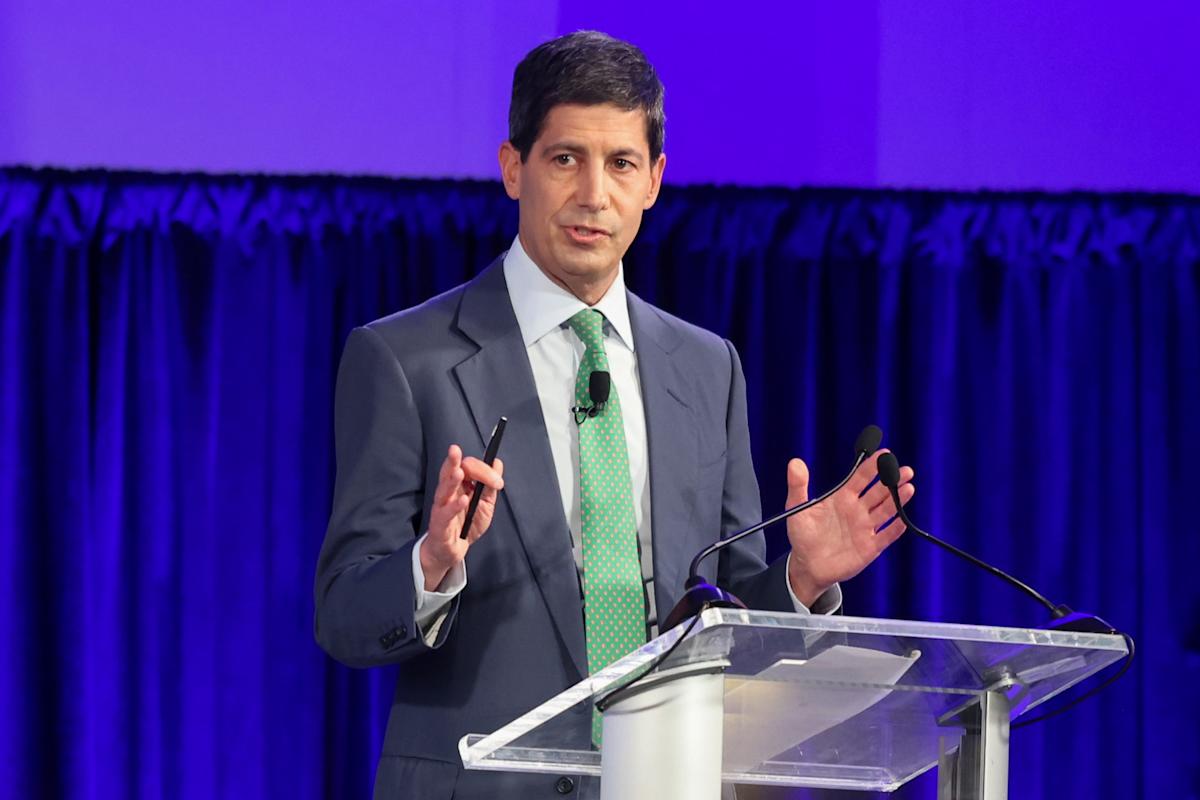
Fed Officials Resist Warsh's Push for Immediate Rate Cuts Amid Economic Headwinds
The path to interest rate cuts for Kevin Warsh, a potential future leader of the Federal Reserve, appears increasingly fraught with challenges even before his formal nomination. President Donald Trump's expectations for immediate monetary easing are colliding with a stark reality: a U.S. economy that shows resilience and a Federal Reserve wary of prematurely loosening policy. Current Fed officials are demonstrating strong resistance to a swift pivot, citing persistent inflation, a robust labor market, and emerging geopolitical risks. This brewing ideological and practical conflict suggests that Warsh's vision for significant `warsh rate cuts` faces substantial hurdles.The Fed's Stance: Why Immediate Cuts Are a Tough Sell
The prevailing sentiment within the Federal Reserve is one of caution. After a series of rate cuts in late 2025, policymakers opted to hold steady in January 2026, a decision underpinned by several key economic indicators that run counter to the immediate need for lower rates.- Persistent Inflationary Pressures: Inflation remains a primary concern for the Fed. Last year, it ended almost a full percentage point above the central bank's 2% target. Officials see no compelling reason to rush additional cuts when price stability has not yet been definitively achieved. This concern about "sticky inflation" — where prices, once elevated, are slow to decline — suggests a long-term battle rather than a transient blip.
- Robust Labor Market: The U.S. labor market has shown remarkable resilience. Following a strong January jobs report, most policymakers have endorsed the idea that the labor market is stabilizing, if not still strengthening. This robust employment picture reduces the urgency for the Fed to stimulate the economy through lower rates. Even Governor Christopher Waller, who previously advocated for a quarter-point cut in January, has acknowledged that an improving labor market might warrant another hold at upcoming meetings. Cleveland Fed President Beth Hammack, a voter on rate decisions this year, explicitly stated her expectation for rates to remain on hold for "some time."
- Geopolitical Volatility and Oil Prices: Adding another layer of complexity is the resurgence of geopolitical tensions, particularly renewed conflict in the Middle East. The early fallout from the U.S.-Israeli war on Iran saw oil prices surge by nearly 20% recently, representing the biggest increase in four years. Such a spike in energy costs can directly feed into broader inflation, making Fed officials even more reluctant to consider `warsh rate cuts`. This external shock reinforces the need for a cautious monetary policy stance.
The confluence of these factors creates a powerful argument against rapid monetary easing. For more insights into these challenges, read Warsh's Path to Fed Rate Cuts Blocked by Inflation, Oil.
Warsh's Vision: Innovation, Disinflation, and the Balance Sheet
Kevin Warsh's economic philosophy, which underpins his advocacy for lower interest rates, centers on a distinct set of ideas that appear to be at odds with the current Fed consensus. His vision largely rests on two main tenets:- Technology-Driven Low-Inflation Boom: Warsh posits that a looming technology revolution is poised to usher in a period of sustained economic growth coupled with inherently low inflation. This perspective suggests that productivity gains from new technologies will effectively counteract inflationary pressures, thereby creating ample room for the Fed to lower rates without risking runaway prices.
- Downsizing the Fed's Balance Sheet: A significant component of Warsh's strategy involves actively reducing the Federal Reserve's massive balance sheet, which expanded dramatically during various crises to inject liquidity into the financial system. His pledge to downsize it reflects a desire to return the Fed's operations to a more traditional, smaller footprint.
However, several current policymakers have openly voiced skepticism over these ideas. The belief that a technology revolution will automatically deliver disinflationary benefits is not universally shared within the Fed, especially when current data points to elevated inflation. Similarly, while balance sheet normalization is a long-term goal for many, the timing and speed of such actions are highly debated, particularly if it risks tightening financial conditions too aggressively. This ideological gap poses a significant challenge for `warsh rate cuts`, as he would need to persuade his colleagues to adopt a fundamentally different economic outlook.